

Amid dual pressures of shrinking overseas orders and rising trade barriers, the path of technological innovation for China's tire manufacturing industry is becoming clearer and more urgent than ever.
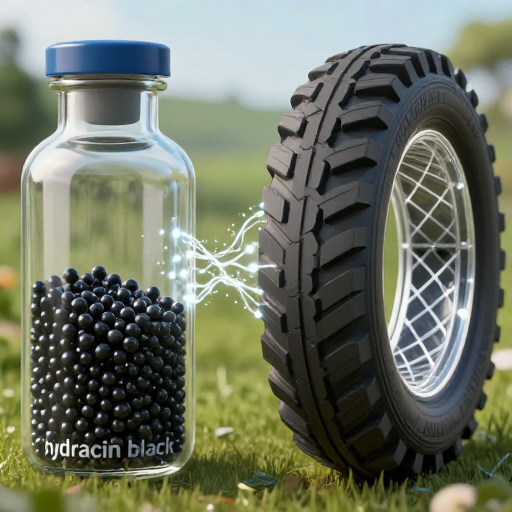
On November 20, 2025, in Shanghai, China, Hankook Tire signed a Memorandum of Understanding with the innovative technology company ROTOBOOST, aimed at jointly developing "turquoise hydrogen-based carbon black" material. Behind this seemingly specialized technical agreement lies a much broader goal: to reduce the greenhouse gas emission intensity of this core material by over 50% without compromising tire performance.
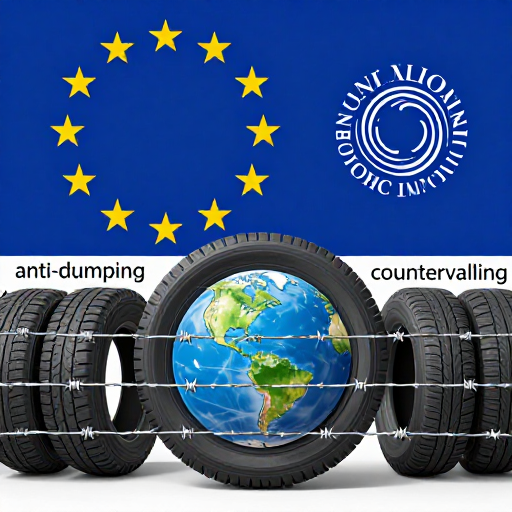
Almost simultaneously, on the other side of the vast Eurasian continent, the Eurasian Economic Commission officially announced the initiation of the second sunset review investigation into anti-dumping duties on heavy-duty tires originating from China. This trade measure, which began in 2014, may see its validity period extended once more.
On one side, breakthroughs in cutting-edge green materials are being sought to establish a future-proof moat; on the other, the traditional export market continues to face a severe trade environment. This forms the truest dual portrait of China's current truck tire industry.
01 Market Downturn: Global Order Weakness and Structural Divergence
Recent market data has cast a layer of frost over the industry. Research by the professional information agency Longzhong Information shows that entering December 2025, the momentum for new orders at Chinese tire companies has significantly weakened. Over half of the passenger car tire sample enterprises reported lower orders compared to the previous month. The situation for truck/bus tire enterprises was slightly better, but more than a third still faced declining orders.
Seasonal demand weakness and overall soft demand both domestically and overseas are cited as the main reasons for this phenomenon. Some enterprises have already responded to market changes by controlling output or planning equipment maintenance. However, beneath the surface of global market weakness, a structural divergence in demand is occurring.
According to forecasts by the U.S. Tire Manufacturers Association, total U.S. tire shipments in 2025 are expected to increase by a mere 0.03% from the record year of 2024. A deeper analysis of its structure reveals a tale of "two diametrically opposed worlds" in the commercial vehicle sector represented by truck tires: Original Equipment shipments for truck tires are projected to fall sharply by 18.1%, while replacement market shipments are expected to grow by 7.9%.
This data clearly reveals the current state of the logistics and transportation field: new vehicle sales growth is slowing, but the vast fleet of existing vehicles is still operating efficiently. Their ongoing maintenance and replacement needs form a solid foundation for the market.
02 Trade Siege: New Challenges in Going Global Under "Double Reverse" Investigations
As companies actively cope with cyclical market fluctuations, institutional barriers from overseas markets are becoming more complex and long-term. For Chinese truck tire exporters, November 2025 was a challenging month.
At the beginning of the month, the European Commission formally announced the initiation of a countervailing duty investigation into new pneumatic rubber tires for cars and light trucks originating from China. The subsidy investigation period for this probe covers the entire year of 2024, while the injury investigation period traces back to the beginning of 2021. The scope is clearly limited to tires with a load index not exceeding 121, covering almost all mainstream light truck tire products.
At the end of the month, the announcement from the Eurasian Economic Union followed closely, declaring the start of the second sunset review investigation into anti-dumping duties on Chinese heavy-duty tires. This means the anti-dumping duties, which have been in effect since December 2015 with rates as high as 14.79% to 35.35%, are highly likely to be extended again after their scheduled expiry in June 2026. The Union had previously initiated an anti-circumvention investigation in 2022 targeting the Chinese practice of exporting "tires mounted on rims" and ultimately decided to impose the same anti-dumping duties.
From the EU's "countervailing" investigation to the Eurasian Economic Union's "anti-dumping sunset review," and to historical "anti-circumvention" and "changed circumstances review," the names of trade remedy measures keep changing, but the core objective remains consistent: protecting domestic industries.
These dense trade actions send a clear signal to the Chinese tire industry: the traditional export path of relying on price advantages to impact existing markets is narrowing and fraught with increasing uncertainty.
03 Technological Breakthrough: The "X System" Born for the Electric Era
External pressure forces internal transformation. When traditional markets encounter bottlenecks, true game-changers often emerge from disruptive technological innovation. Zhongce Rubber, a leader in China's tire industry, has chosen to launch a frontal assault on the new energy track.
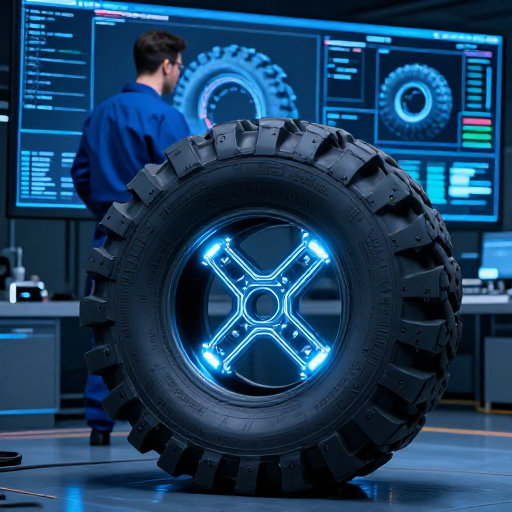
In July 2025, Zhongce Rubber globally launched its "X Technology System" and matching tire products designed specifically for electric commercial vehicles in Chengdu. The backdrop for this launch is that the total electrification penetration rate of Chinese commercial vehicles has reached 27% and continues to rise rapidly. However, the dual characteristics of electric vehicles—"instantaneous high torque" and "significant weight increase" due to batteries—have plunged traditional tires into a new "three highs" dilemma: high wear, high failure, and high irregular wear.
Shen Jinrong, Chairman of Zhongce Rubber Group, pointed out that tires have become the core component determining "how far, how long, and how efficiently" an electric commercial vehicle can run. To solve this industry pain point, Zhongce integrated over 60 years of technical expertise, collaborated with top universities on over 110 industry-university projects, and ultimately developed the "X Technology System".
The system is built on three core technological pillars: The X-Carbon Extreme Technology, employing a globally pioneering enhanced composite material, increases tire wear resistance by 50% and reduces key failure rates by 50%. The X-Xuanjia Technology works from the internal skeleton structure to enhance tire sturdiness and stability. The X-Art Technology innovates the manufacturing process to improve the density and durability of the tire compound.
The essence of this technological breakthrough is a fundamental shift in product philosophy—from "adapting for fuel vehicles" to "born for electric." It is not only an achievement for Zhongce Rubber but was also praised by Xu Wenying, President of the China Rubber Industry Association, as a powerful practice in implementing the high-end and green development of China's tire industry.
04 Material Revolution: From Green Carbon Black to the Future of Airless Tires
Technological innovation is happening not only at the system design level but also deeply into the most basic material field. Global tire companies are racing to develop the next generation of sustainable materials to meet increasingly stringent environmental regulations and carbon neutrality goals.
Hankook Tire's cooperation with ROTOBOOST is an epitome of this trend. The "turquoise hydrogen-based carbon black" they aim to develop is a solid carbon byproduct generated during the process of extracting hydrogen from methane via thermal catalytic decomposition. Its greatest advantage is that no carbon dioxide emissions are produced during its production, earning it the label of an environmentally friendly material. Hankook's goal is to verify its performance and ultimately achieve a over 50% reduction in greenhouse gas emissions.
Meanwhile, even more disruptive product forms are being explored. In August 2025, the "Key Technology R&D for High-Performance Airless Elastic Support Tires," independently developed by the Jihua Laboratory, passed a scientific and technological achievement evaluation organized by the China Rubber Industry Association. The expert panel concluded that the project had reached internationally advanced levels overall, with some aspects leading internationally.
Airless tires completely abandon traditional compressed air, instead using special polymer materials and pioneering support structures for load-bearing and cushioning. Their revolutionary significance lies in fundamentally eliminating the risk of blowouts, greatly improving safety and reducing maintenance needs.
Although this technology has not yet been industrialized on a large scale, it represents another future direction for tire design. From green carbon black materials to airless structures, these cutting-edge explorations collectively point toward a future of tires that are safer, more environmentally friendly, and more durable.
05 Dual-Track Race: Seeking Balance Between Present Survival and Future Leadership
China's current truck tire industry is advancing on a unique "dual-track" course. One track is addressing the immediate challenge of survival: digesting fluctuations in overseas orders, navigating increasingly complex international trade rules, and maintaining competitiveness in existing markets through cost control and efficiency improvements.
The other track is competing for future leadership: investing fully in R&D for electrification-specific technologies, positioning in green sustainable materials, and even exploring disruptive product forms like airless tires.
For industry leaders like Zhongce Rubber and Hankook Tire, both tracks must be pursued in parallel. They need the profits from traditional markets to fund expensive cutting-edge R&D. Simultaneously, they urgently require breakthrough technologies and products to build new competitive moats, escape the quagmire of homogeneous price wars, and break through the trade barriers in overseas markets.
The expectations of the China Rubber Industry Association for enterprises also reflect this "dual nature": on one hand, hoping companies will continue to increase R&D investment and drive product innovation; on the other, calling for strengthened industry chain collaboration and continued deepening of globalization strategies. This precisely constitutes a complete strategy for coping with the current complex situation: using innovation to enhance value, using cooperation to solidify foundations, and using genuine globalization to break dependence on single markets.
From the green material cooperation agreement signed in Shanghai, to the electric "X System" launched in Chengdu, to the trade investigations initiated in Brussels and by the Eurasian Economic Commission, the end of 2025 for China's truck tire industry is full of tension. When the U.S. replacement market's projected growth of 7.9% appears alongside the EU's countervailing duty investigation announcement, the industry's survival rules have already been rewritten.
Technology, especially the defining, "born-for-electric" exclusive technology of the new era, is no longer an optional embellishment but the ballast for navigating cycles and weathering storms. The finish line of this race is no longer producing cheaper tires, but creating tires that better define the future of transportation.

Copyright © 2024-2025 Firemax Sdn. Bhd Company. All rights reserved.
Headquarters address:303 block C, Pusat Dagangan Phileo Damansara 1, No 9 Jln 16/11 Off Jalan Damansara, 46350 Petaling Jaya, Selangor. Malaysia Sales Hotline:+60 11-6449 0688 After-sales hotline:+60 11-6449 0688