

As the year draws to a close, the global commercial truck tire industry stands at a crossroads brimming with tension and transformation. On one hand, a technological revolution centered on electrification and intelligence is reshaping products at an unprecedented pace. On the other, an increasingly complex international trade environment casts a shadow of great uncertainty over the industry's path forward. From an urgent recall in North America to trade investigations in Europe and South America, and breakthrough innovations led by Chinese companies, a series of recent events paint a vivid picture of an industry's "song of ice and fire." This article compiles the key dynamics worth noting at year-end, offering insights into the future direction of commercial truck tires.
1. Safety Alarm: Urgent Recall in North America Highlights the Lifeline of Quality
Recently, Firestone, a brand under the global tire giant Bridgestone, initiated a high-profile recall in the North American market-. According to filings with the U.S. National Highway Traffic Safety Administration (NHTSA), this recall involves up to 1,742 Firestone LE3 all-terrain tires, with an estimated half (856) posing clear safety hazards--1.
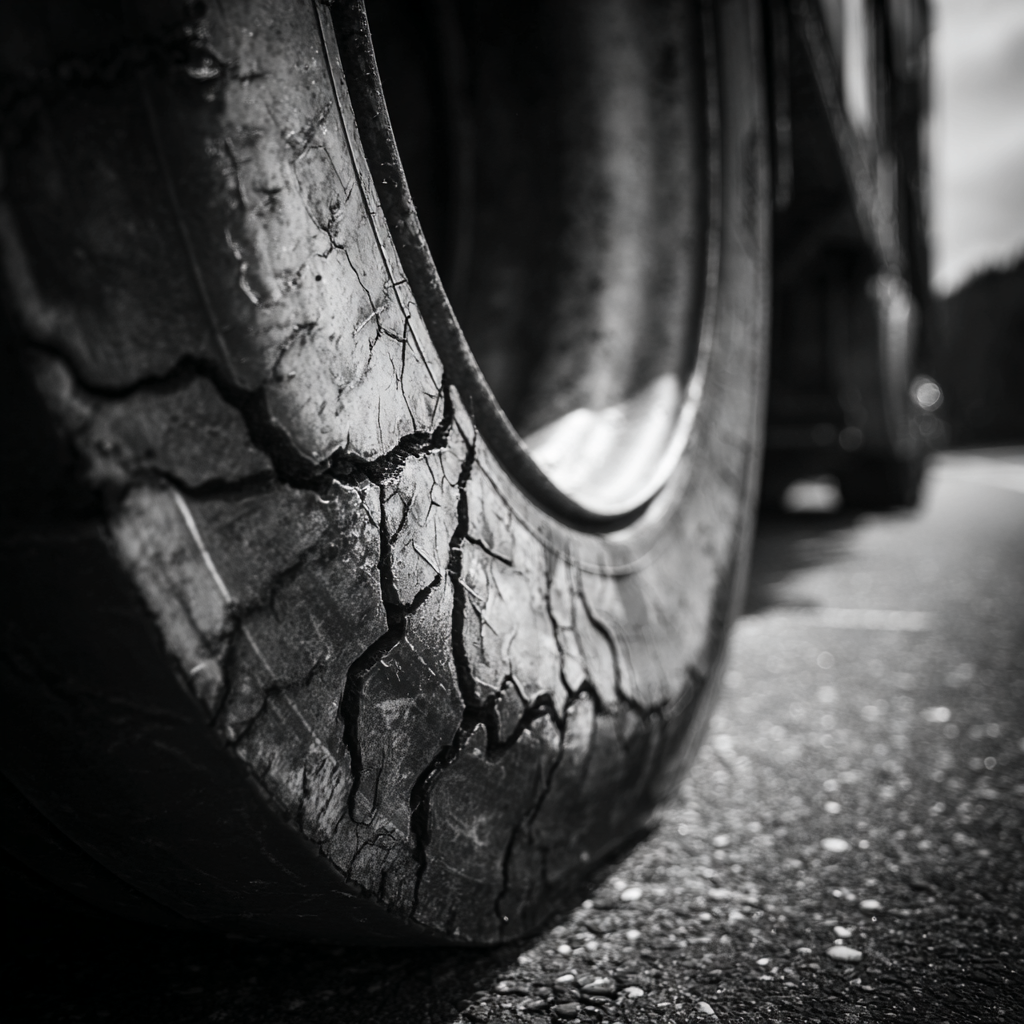
The affected tires were manufactured between October 26 and November 8, 2025, at Bridgestone's Wilson, North Carolina plant. The size is 265/70R17, primarily for the light truck, crossover, and SUV aftermarket--1. Bridgestone identified the root cause as a manufacturing defect—approximately 50% of the tires have a "belt edge insert placement deviation"--1. This deviation can not only reduce tire durability but also lead to belt edge separation or cause circumferential cracks, posing a serious risk of blowouts during high-speed driving--1.
This recall once again sounds the alarm for quality and safety in commercial truck tires. For fleet operators, tires are not just consumables but a lifeline concerning the safety of personnel and cargo. Regular inspections, compliant use, and prompt response to manufacturer recalls are essential practices for mitigating risks and ensuring transportation safety.
2. Technological Wave: Chinese Tire Companies Lead the "EV-Specific" Era
As traditional fuel vehicles transition to electrification, commercial truck tires are undergoing their own dedicated technological revolution. The "high torque, high load" characteristics of electric commercial vehicles present new challenges of "high wear, high failure, and irregular wear"--13. Addressing this industry pain point, leading Chinese tire companies have recently launched revolutionary solutions.
At its 2026 marketing conference on December 25, Guizhou Tire proudly unveiled its "All-Scenario E-Drive Series" of new products--5. Its truck and bus dedicated "E-MileageMax Series" tackles the range anxiety and load-bearing needs of electric commercial vehicles head-on, seeking a balance between energy efficiency and load capacity through new low rolling resistance compounds and high-strength casing structures-5. Guizhou Tire emphasized that its solutions are built upon the intelligent manufacturing system of its global "Lighthouse Factory," aiming to provide high-value solutions for the electric era-5-5.
Almost simultaneously, another industry giant, Zhongce Rubber, reiterated its globally premiered "X Technology System"-. This system includes core technologies like X-Carbon Extreme and X-Mystic Armor, claiming to systematically solve the "three highs" dilemma of electric commercial vehicles, for example, improving wear resistance by 50% and reducing bead failure rates by 50%-13. Zhongce has launched a full family of EV-dedicated tires covering heavy trucks, light trucks, and buses based on this system, achieving mass production adaptation with mainstream domestic commercial vehicle manufacturers-13. These breakthroughs not only fill market gaps but also signify that Chinese tire companies are starting from fundamental innovation in material science, attempting to transform tires from a "cost center" into a "value engine"-13.
3. Trade Headwinds: The Shadow of "Dual Anti" Investigations Looms Over Export Markets
While technological innovation advances triumphantly, the overseas journey of Chinese tires is facing strong "headwinds." At the end of 2025, the momentum of international trade protectionism remains strong, posing severe challenges to the Chinese tire industry, which heavily relies on exports.
The most watched is the EU's "dual anti" (anti-dumping, anti-subsidy) investigation into Chinese tires. Although the European Commission decided on December 18 not to impose provisional anti-dumping measures due to "technical complexity," this is by no means the end of the matter--6. The investigation continues, with a final ruling expected in June 2026, and the risk of retroactive duties persists-2-6. This uncertainty has had an immediate market impact: data shows China's tire exports to the EU in October and November 2025 fell sharply by 36.49% and 50.63% year-on-year, respectively-6. European importers, wary of potential future back taxes, have become more cautious, with some orders shifting to Chinese companies' overseas factories in places like Southeast Asia-2-6.
Similarly, unfavorable news came from the South American market. Colombia's Ministry of Commerce, Industry, and Tourism issued an announcement in December, formally initiating an anti-dumping investigation into imported new TBR (Truck and Bus Radial) tires from China--7. This is Colombia's first such investigation against Chinese tires in seven years-7. Analysis suggests this may be influenced by multiple factors, including changes in the global trade landscape and the spillover of Chinese goods-7. These successive trade barriers are forcing Chinese tire companies to accelerate their global production capacity layout to respond more flexibly to regional market risks.
4. Industry Pulse: Active Global Investment Coexists with Safety Warnings
Looking globally, investment enthusiasm in the tire industry has not diminished due to trade friction. The "Top Ten Global Rubber and Tire Investment News of 2025" compiled by the China Rubber Industry Association shows that industry expansion and capacity upgrades are still ongoing-.
The list includes heavyweight projects: Linglong Tire plans to invest 8.7 billion RMB to build a large greenfield factory in Brazil; Hankook Tire restarted the expansion of its Hungarian factory, which will add 800,000 commercial tires/year capacity; a Saudi company, in partnership with a Chinese technical partner, launched the Sandstone project aiming for 5 million tires/year-14. These investments indicate that long-term market demand is still viewed positively, and global layout with localized production is becoming a mainstream strategy.
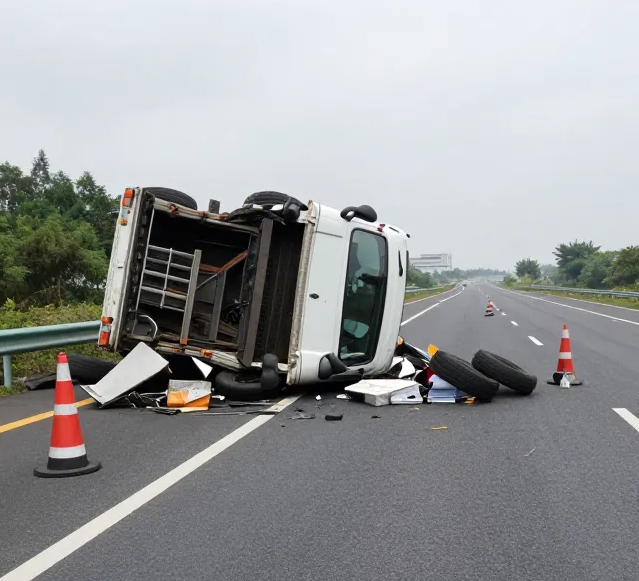
However, beyond the grand industrial plans, the safety reality on the road cannot be ignored. On December 19, a light truck blowout and rollover accident occurred on the G7212 highway in Guangxi, causing severe vehicle damage and scattering cargo over 20 meters--4. Traffic police investigation determined the direct cause was the driver "operating a vehicle with substandard components," leading to loss of control after the blowout-4. This accident once again painfully reminds all transportation professionals: no matter how technology advances, daily inspection, regular maintenance, and timely replacement of tires remain the most fundamental and crucial steps in preventing accidents and safeguarding lives-4.
Conclusion: Seeking a Certain Future Amid Uncertainty
Reflecting on the end of 2025, the narrative of the commercial truck tire industry is full of contradiction and unity. Safety recalls and traffic accidents warn us that product quality and routine maintenance are an unchanging foundation. The emergence of EV-dedicated tires clearly points to the definite direction of technological iteration—greener, smarter, and more efficient. Meanwhile, the surging wave of trade protectionism is an uncertain challenge that must be faced in the process of globalization.
For companies, future competitiveness will increasingly depend on combining "hard technology" innovation with "soft power" strategy: establishing barriers in core technologies like materials, structure, and intelligence, while also resisting trade risks through a flexible global production network. For users, while embracing the cost-saving and efficiency benefits brought by new technologies, they must never forget their reverence for and commitment to tire safety performance. Only then can the rolling wheels move steadily and far in this era of change.

Copyright © 2024-2025 Firemax Sdn. Bhd Company. All rights reserved.
Headquarters address:303 block C, Pusat Dagangan Phileo Damansara 1, No 9 Jln 16/11 Off Jalan Damansara, 46350 Petaling Jaya, Selangor. Malaysia Sales Hotline:+60 11-6449 0688 After-sales hotline:+60 11-6449 0688