

Paragraph 1 | The last 48 hours, in one picture: truck tires are being pulled by globalization, urban duty cycles, electrification, and data-driven operations
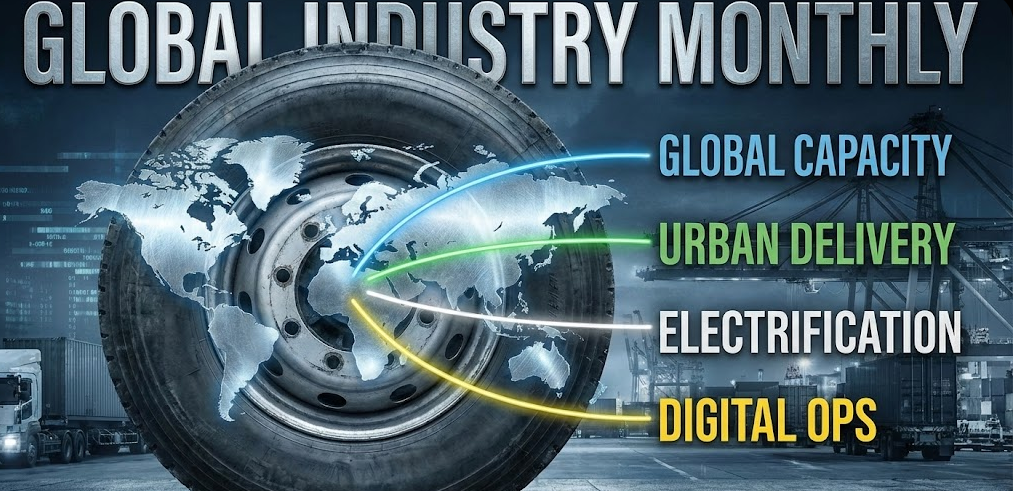
In early January 2026, the commercial tire conversation is no longer limited to “wear life” and “price.” Fleet reality is forcing a broader competition: who can place capacity closer to demand, who can engineer tires that survive the brutal scrub and stop-and-go of urban delivery, who can balance rolling resistance and durability under EV/hybrid torque characteristics, and who can turn tires from consumables into managed assets. In the past two days, public updates from different corners of the industry have highlighted this shift simultaneously—overseas manufacturing footprints, new urban delivery sizes and compounds, pay-per-kilometer tire management, and conference agendas elevating autonomous-era requirements, supply chain decarbonization, and tire wear particle scrutiny. Tire Technology International+4Ecofin Agency+4Tyre Trends+4Paragraph 2 | Global capacity: Guizhou Tyre positions Morocco as an export base aimed at Europe and North America
A January 10 report says Guizhou Tyre plans to invest close to US$300 million in a plant in northern Morocco, framing the move as a manufacturing and export base designed to access European and North American markets more efficiently. The report highlights the site at Mohammed VI Tanger Tech City, notes a two-year construction timeline, and states an intended annual capacity of 6 million tires (the report discusses passenger-tire capacity, but the strategic logic is directly relevant to commercial tires: proximity to market, logistics advantage, and reduced lead-time risk). It also describes the Morocco facility as the company’s second overseas base after Vietnam and includes stated revenue/profit expectations and a broader context of Morocco attracting additional Chinese auto-supply investments. Ecofin AgencyParagraph 3 | Why Morocco matters for tires: not just cost—compliance pathways plus delivery radius
Tires are bulky, freight-sensitive products; commercial tires are even more dependent on fleet uptime and replacement timing. Miss the window, and fleets substitute. That’s why 2026 competitiveness increasingly centers on delivery radius and compliance pathways—placing production where cross-border trade, certification alignment, ports, and logistics can reduce uncertainty. The Morocco narrative in the January 10 coverage is telling: it repeatedly emphasizes efficient access to Europe and North America, industrial park readiness, port infrastructure, and free-trade advantages. In practice, that signals a shift from pure unit-cost thinking toward a combined strategy: predictable lead times, reduced trade friction, and stronger supply resilience. For commercial tires, that typically accelerates adjacent moves as well—regional warehousing, faster spec extensions, and tighter integration with retreading networks. Ecofin AgencyParagraph 4 | Product strategy meets urban reality: Continental expands 19.5-inch HDR 5 / HSR 5 with a new 245/70R19.5 size for stop-and-go delivery
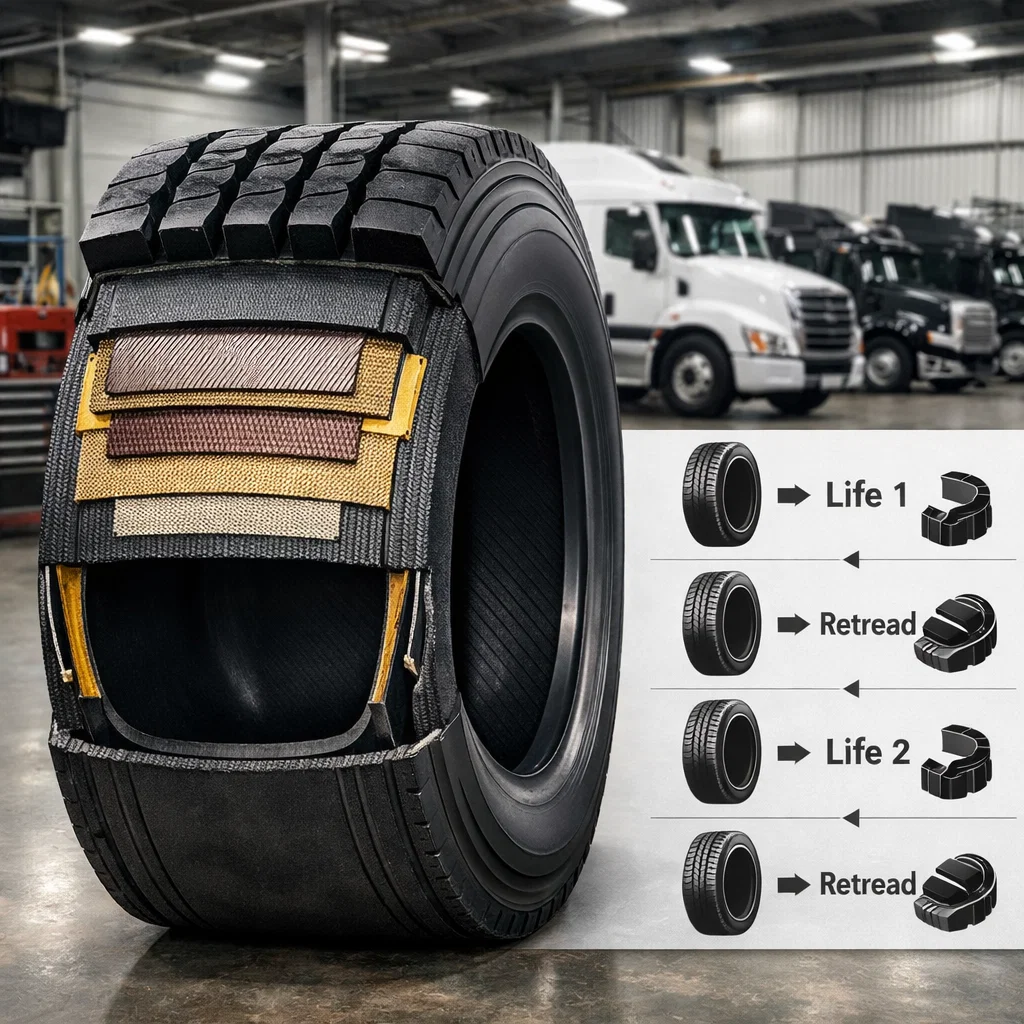
Also dated January 10, a product update states Continental Tires Americas expanded its 19.5-inch HDR 5 and HSR 5 lines with a new 245/70R19.5 size engineered for urban and regional delivery fleets. The description targets high-scrub conditions and demanding stop-and-go cycles. It cites a reformulated tread compound aimed at reducing rolling resistance (supporting fuel economy) while extending tread life, and a redesigned sidewall intended to enhance durability and support multiple retreads to maximize casing value. The update also emphasizes that both models are validated for electric and hybrid vehicles as well as traditional combustion powertrains. Tyre TrendsParagraph 5 | Retread readiness is back at the center—because fleet cost models are tightening
Retreading has always been a lever for lowering cost per mile, but adoption can fluctuate with safety perceptions, casing quality, and operational discipline. What stands out in the January 10 product messaging is how “multiple retreads” and “casing value” are placed alongside “urban duty” and “EV/hybrid validation.” That suggests manufacturers are repositioning retread capability from a secondary benefit to a core product definition. The driver is straightforward: fleets increasingly run on granular unit economics—cost per kilometer, downtime risk, casing lifecycle value. A tire that reliably delivers multiple lives becomes an asset that can be managed and optimized. And once that asset is tied into monitoring and service programs, the variability that once made fleets hesitant can be reduced through process, data, and accountability. Tyre Trends+1Paragraph 6 | Operations: pay-per-kilometer (PPK) tire management shows how fleets buy outcomes, not rubber
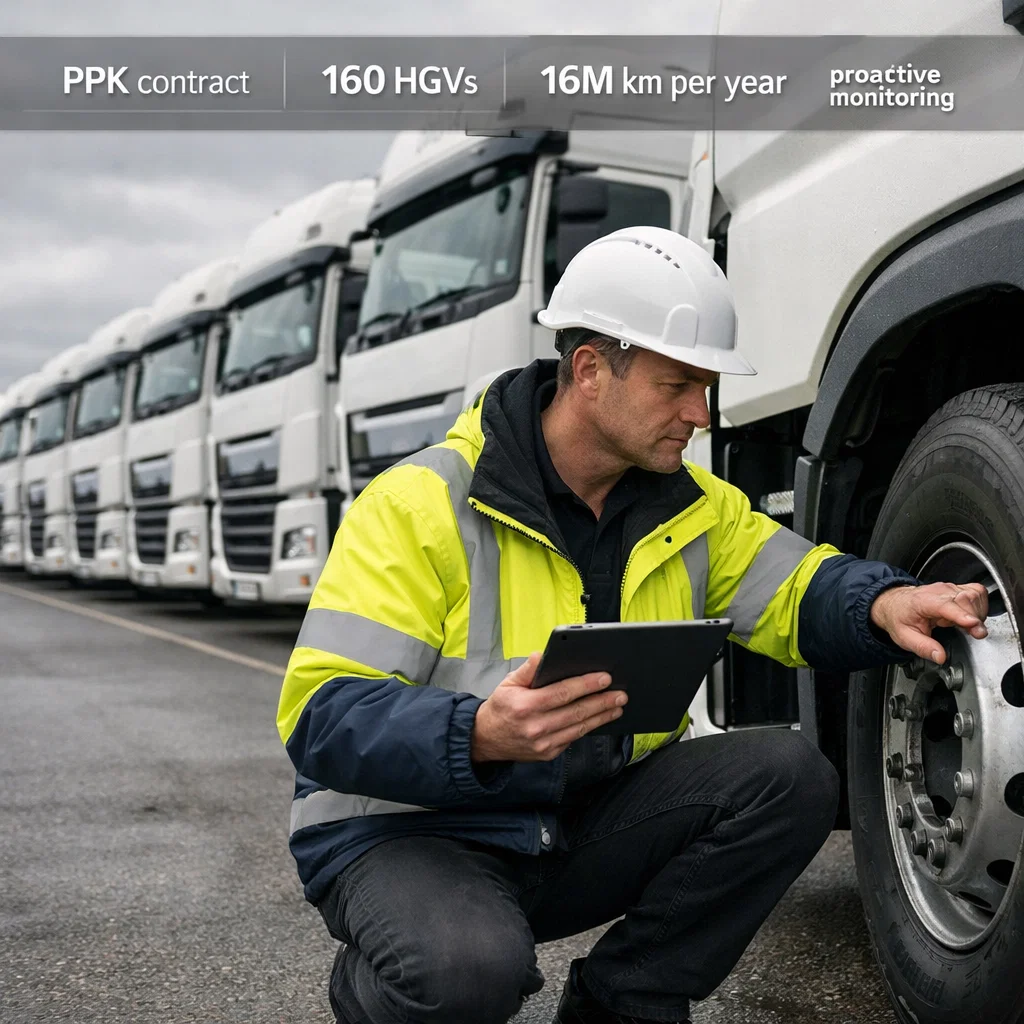
A January 8 article from the UK’s SMMT highlights a concrete fleet example: ForFarmers UK (animal feed manufacturer) operates a nationwide fleet of 160 HGVs and has a contract with Prometeon Tyre Group to supply and maintain all tires under a fixed price-per-kilometer (PPK) structure. The article states the fleet logs about 16 million kilometers per year and frames the value in reducing downtime through proactive monitoring combined with reactive maintenance. It also argues that a carefully managed multi-life tire policy can make sense simultaneously for safety, environmental impact, and total cost. SMMTParagraph 7 | When product design meets PPK: the industry’s real product becomes predictability
Put the new urban delivery spec (retread-ready, EV-validated) next to the PPK model and you see a deeper transformation: tire makers are moving from selling units to owning performance outcomes. Urban stop-and-go, high scrub, and electrification amplify the fleet’s need for consistency and predictability. PPK converts procurement debates into service delivery: control cost per kilometer, minimize downtime, maximize casing lives, and maintain safety KPIs—and fleets will sign long-term. That, in turn, forces product engineering to look like a systems project: durable sidewalls, stable wear curves, optimized rolling resistance vs. mileage tradeoffs, and casing designs that survive retreading. On the operations side, monitoring, inflation management, rotation discipline, and timely interventions reduce uncertainty. The January 10 product emphasis and the January 8 operational framing neatly close the loop. Tyre Trends+1Paragraph 8 | The conference agenda signals what’s next: autonomous-era requirements, traceable decarbonization, and tire wear particle scrutiny
A January 9 preview article for Tire Technology Expo 2026 says the opening plenary will frame the industry’s direction through three complementary lenses: how vehicles are evolving, how materials and supply chains must transform, and how tire makers respond to rising scrutiny around emissions and environmental impact. The article notes that as autonomous systems move beyond pilots toward scaled commercial operations, the tire industry is being asked to support a more diverse vehicle ecosystem and to deliver durability, predictability, and real-world service performance—while enabling data-rich consistency for smart vehicle dynamics. It also highlights decarbonization pathways centered on traceable, measurable supply chains (including renewable/recycled building blocks) and points to growing regulatory and societal attention on tire and road wear particles (TRWP), including how they are generated, transported, and assessed. Tire Technology InternationalParagraph 9 | What autonomy means for commercial tires: longer utilization, fewer human buffers, higher failure costs
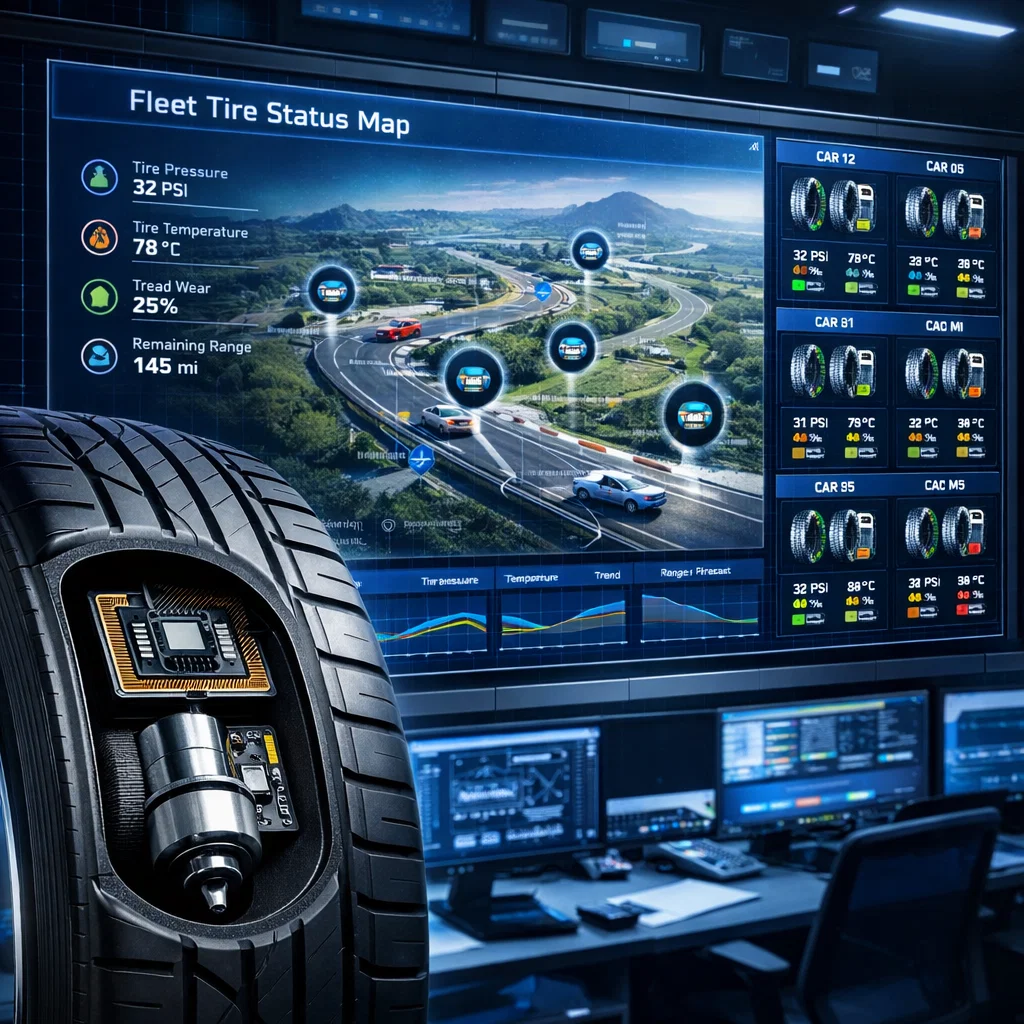
For commercial transport, autonomy and advanced driver systems don’t only “free the driver”—they push fleets toward higher utilization and more systemized dispatch, which magnifies the cost of unplanned downtime. When operations run like a synchronized network, a single roadside failure cascades into missed delivery windows and disrupted routing. That’s why the autonomous-era tire discussion increasingly centers on predictability: smoother wear trajectories, controlled thermal behavior, consistent casing performance, and connectivity that turns the tire into an observable component rather than a black box. Pair that with PPK economics and the next battleground becomes clear: who can price uncertainty out of the system with data, service discipline, and engineering—rather than who can simply cut the invoice price. Tire Technology International+1Paragraph 10 | Closing: 2026 truck tires will be repriced in a five-front fight—global delivery, urban duty, EV readiness, service models, and sustainability pressure
Viewed together, the past two days of public signals paint a coherent picture. Upstream, manufacturers are restructuring delivery networks via export-oriented overseas bases (Morocco positioned as a gateway toward the EU and North America). In product strategy, suppliers are extending specifications and rebalancing compounds/structures for urban high-scrub routes and electrified powertrains—while putting retreadability back at the heart of casing value. Downstream, fleets are shifting procurement toward outcome-based models like PPK, turning tire performance into an operational KPI. Meanwhile, the broader technology conversation is elevating autonomy, supply chain decarbonization, and TRWP scrutiny—topics that increasingly shape what “a good tire” even means. The next wave of winners will likely be those who can package casing durability + monitoring + service networks + compliant trade pathways into a repeatable solution, not just a product. Tire Technology International+3Ecofin Agency+3Tyre Trends+3






Copyright © 2024-2025 Firemax Sdn. Bhd Company. All rights reserved.
Headquarters address:303 block C, Pusat Dagangan Phileo Damansara 1, No 9 Jln 16/11 Off Jalan Damansara, 46350 Petaling Jaya, Selangor. Malaysia Sales Hotline:+60 11-6449 0688 After-sales hotline:+60 11-6449 0688