
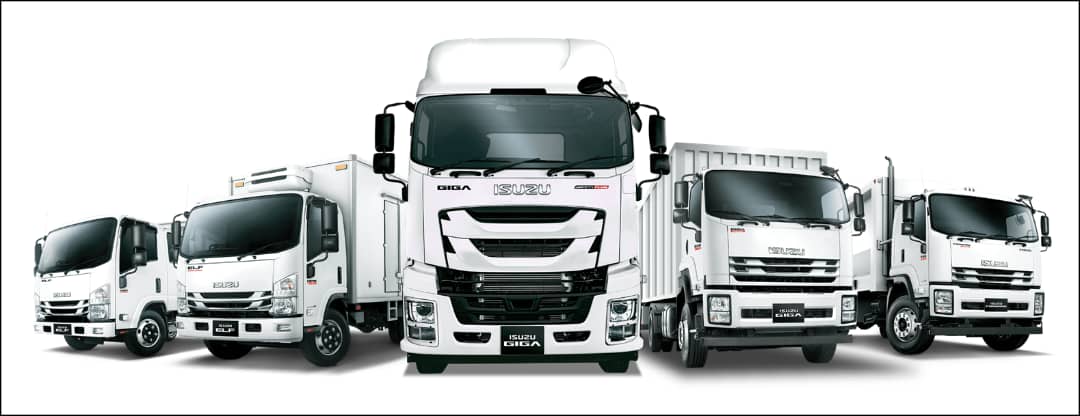

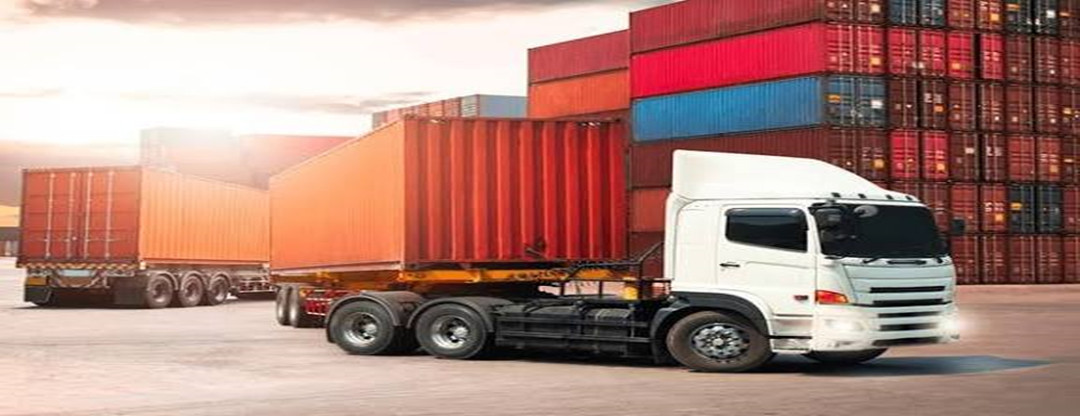
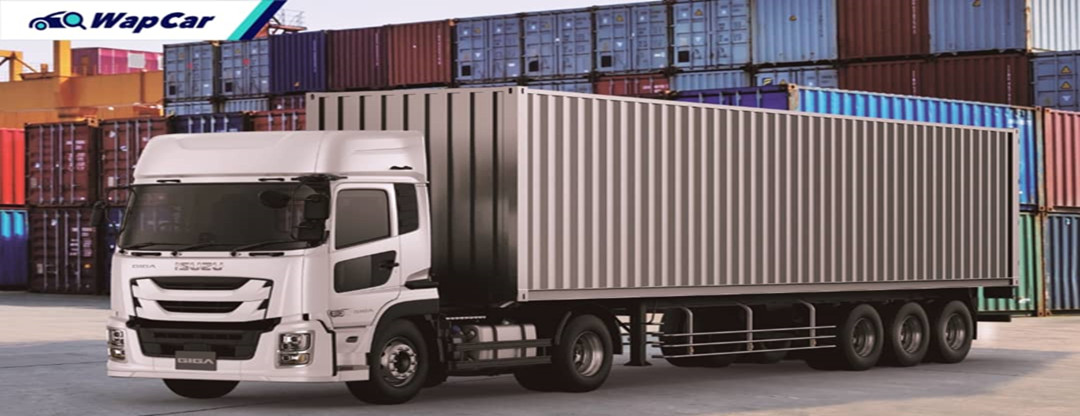

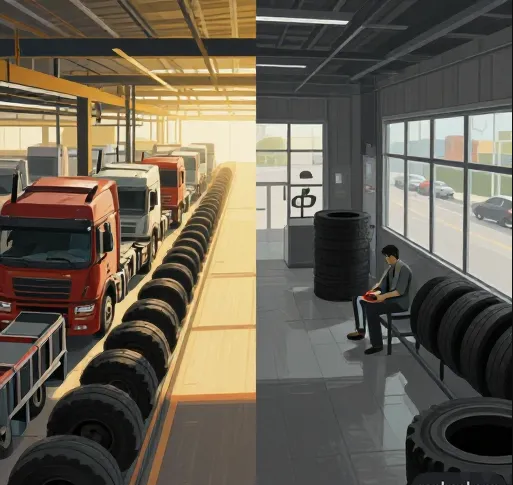
In the dead of night, at a tire manufacturing plant in Shandong, brand-new all-steel radial truck tires are stacked to the ceiling in the warehouse, with more products covering the factory yard awaiting shipment. The factory manager looks at the production report with a wry smile: “The production line can’t stop. If it does, we’ll lose skilled workers. But the tires we produce now can only pile up.”
Simultaneously, thousands of miles away in Guangdong, the owner of a tire retail store is tallying this month’s accounts, shaking his head. Sales this month have dropped by over 30% compared to the same period last year. “There are hardly any trucks on the road. Tires just aren’t selling”-1.
01 Market Status: A Tale of Two Extremes
The current Chinese truck tire market is experiencing an unprecedented split. On one side, new heavy-duty truck sales continue to surge, while on the other, demand in the replacement market is shrinking sharply.
In November 2025, China’s heavy-duty truck sales approached the 100,000-unit mark, a year-on-year increase of nearly 50%, marking the eighth consecutive month of growth-4. This boom in new truck sales generated over 1.27 million new all-steel tire orders for the original equipment (OE) market in October alone-4.
In stark contrast, the tire replacement market is experiencing a severe downturn. Industry surveys reveal a bleak picture on the ground: a staggering 75% of truck tire retail stores reported a month-on-month decline in sales in 2025, with only 9% managing to achieve growth-1. This trend is directly linked to the depressed freight transport sector. With many logistics companies struggling to find cargo, vehicle utilization has dropped, significantly extending tire replacement cycles.
02 OE Market: The Profit Dilemma Behind Booming Orders
The sustained surge in heavy-duty truck sales is directly fueling the OE tire segment. Data shows that in the first half of 2025, China’s commercial vehicle production and sales exceeded 2.1 million and 2.12 million units respectively, driving an estimated 4.7% year-on-year increase in demand for commercial vehicle tire配套 (OE fitment), amounting to approximately 14.7 million units-2-4.
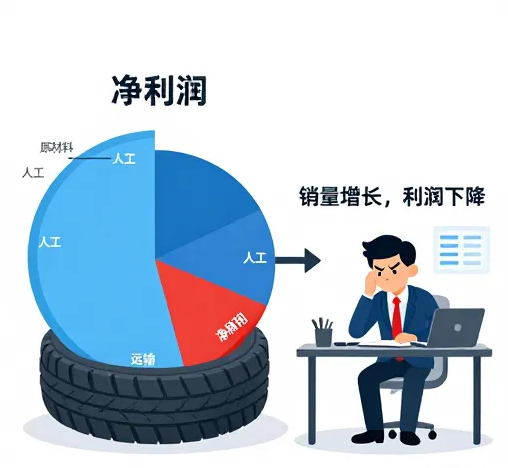
However, beneath this apparent prosperity lies intense pressure on profitability. Vehicle manufacturers, grappling with massive investments required for the new energy transition, are relentlessly squeezing costs in their traditional supply chains. As one of the heaviest consumables for trucks, all-steel tires bear the brunt of this pressure. The average procurement price for OE heavy-duty truck tires has reportedly decreased compared to three years ago, while the cost of key raw materials like natural rubber has risen-4. This profit squeeze has placed tire manufacturers in a paradoxical situation of potentially “losing more the more they sell” in the OE segment.
03 Replacement Market: Demand Contraction and a Price War Quagmire
While the OE market enjoys temporary heat, the replacement market for truck tires is in a deep freeze. Theoretically, the massive number of new trucks sold now will enter the replacement cycle in 1-2 years, creating a future demand peak. However, the current reality in the logistics industry has frozen this expectation.
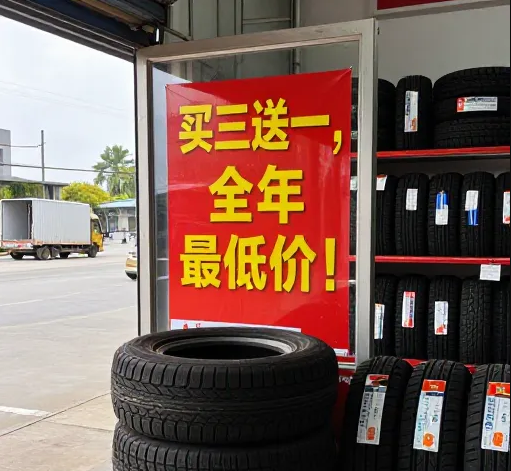
The situation for retail stores is dire. Beyond the 75% sales decline, an equal proportion (75%) of store owners also reported shrinking profits-1. Faced with evaporating demand, a brutal price war has erupted. The average price for all-steel replacement tires has fallen significantly, with some distributors offering promotions like “buy three, get one free” to attract scarce customers.
This has fundamentally altered consumer behavior. Faced with abundant brand choices, truck owners have become extremely price-sensitive, while brand loyalty has plummeted-1. To survive, many stores are shifting focus to tire repair services. “New tires aren’t selling. We mainly rely on repair work now,” admitted one store owner-1. While this provides a lifeline for cash flow, it cannot compensate for the losses from plummeting new tire sales.
04 Export Challenges: Intensifying International Trade Barriers
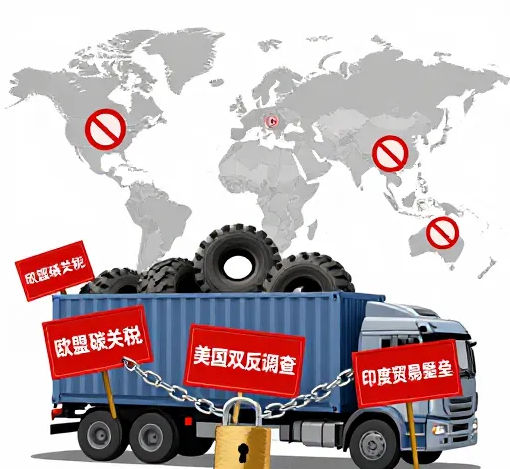
As the domestic market struggles with its internal split, the once-reliable export market is increasingly walled off by a rise in trade protectionism. A significant new challenge is the European Union’s Carbon Border Adjustment Mechanism (CBAM), which now covers tires, potentially imposing additional costs on exports-4.
More immediately impactful are traditional trade remedies. The U.S. Commerce Department’s anti-dumping and countervailing investigations into Chinese truck tires have resulted in preliminary duty rates as high as 45.8%, severely limiting market access-4. The ripple effects are spreading globally, with countries like India and Brazil initiating similar investigations-4.
The impact is already being felt in order books. Data from December 2025 shows that 45% of sampled all-steel tire manufacturers reported a month-on-month decrease in export orders-10. European demand is particularly weak, with truck and bus tire shipments in the third quarter of 2025 falling 4% year-on-year-4.
05 The Road to Transformation: A Difficult Shift from Price to Value
Confronted with these multifaceted challenges, the industry is being forced to seek new paths for transformation and upgrading. Product diversification towards premium and specialized segments has become a consensus strategy.
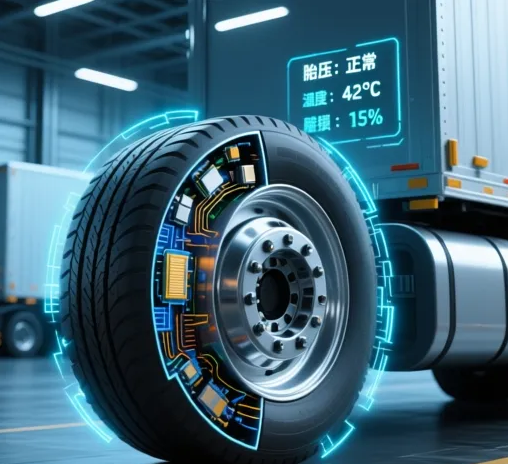
The rise of new energy commercial vehicles, whose penetration rate has historically exceeded 30%, is creating a new blue ocean for specialized tires with low rolling resistance and high load capacity-4. Sales of such products are showing strong growth-4. Similarly, high-value products like all-steel giant tires (Oversize/OTR tires) are performing exceptionally well, helping manufacturers offset broader cost pressures-4.
Leading Chinese tire makers are also accelerating their global footprint through overseas production bases to mitigate trade risks-8. However, the transformation faces significant hurdles. The average R&D investment ratio for Chinese tire companies remains around 2.3%, lagging behind the 5%+ typical of international giants-4. This gap contributes to a persistent market perception of Chinese tires in the international market, where comparable products are often priced 25%-30% lower than established global brands-4.
Conclusion: Navigating the Crossroads
The Chinese all-steel tire industry stands at a critical crossroads. In warehouses in Shandong, production continues, but inventory numbers keep rising. In retail shops in Guangdong, owners are pivoting to repairs, searching for survival in a harsh winter.
Overseas, the market sends mixed signals: the U.S. Tire Manufacturers Association predicts a 7.9% growth in replacement truck tire shipments for 2025, a stark contrast to the domestic situation-4. The global commercial vehicle tire market is projected to grow to $33.9 billion by 2032-4. The ability of Chinese tire enterprises to navigate the current divergence—balancing short-term OE opportunities with long-term replacement market strategies, overcoming trade barriers through innovation and global布局 (layout), and successfully transitioning from competing on price to competing on value—will define the industry’s landscape for the next decade.
Copyright © 2024-2025 Firemax Sdn. Bhd Company. All rights reserved.
Headquarters address:303 block C, Pusat Dagangan Phileo Damansara 1, No 9 Jln 16/11 Off Jalan Damansara, 46350 Petaling Jaya, Selangor. Malaysia Sales Hotline:+60 11-6449 0688 After-sales hotline:+60 11-6449 0688